Custom PVC Tactical Patches
PVC Tactical Patches is the page entity and pvc tactical patches is its primary search context. PVC uses flexible moulded rubber to create a waterproof, wipe-clean tactical patch with raised 2D or 3D relief. Buyers use this guidance to specify a UK-made result before approving a quotation and digital proof. The wider custom tactical patches guide connects this subject to materials, backing, sizes and field applications.
What Are PVC Tactical Patches?
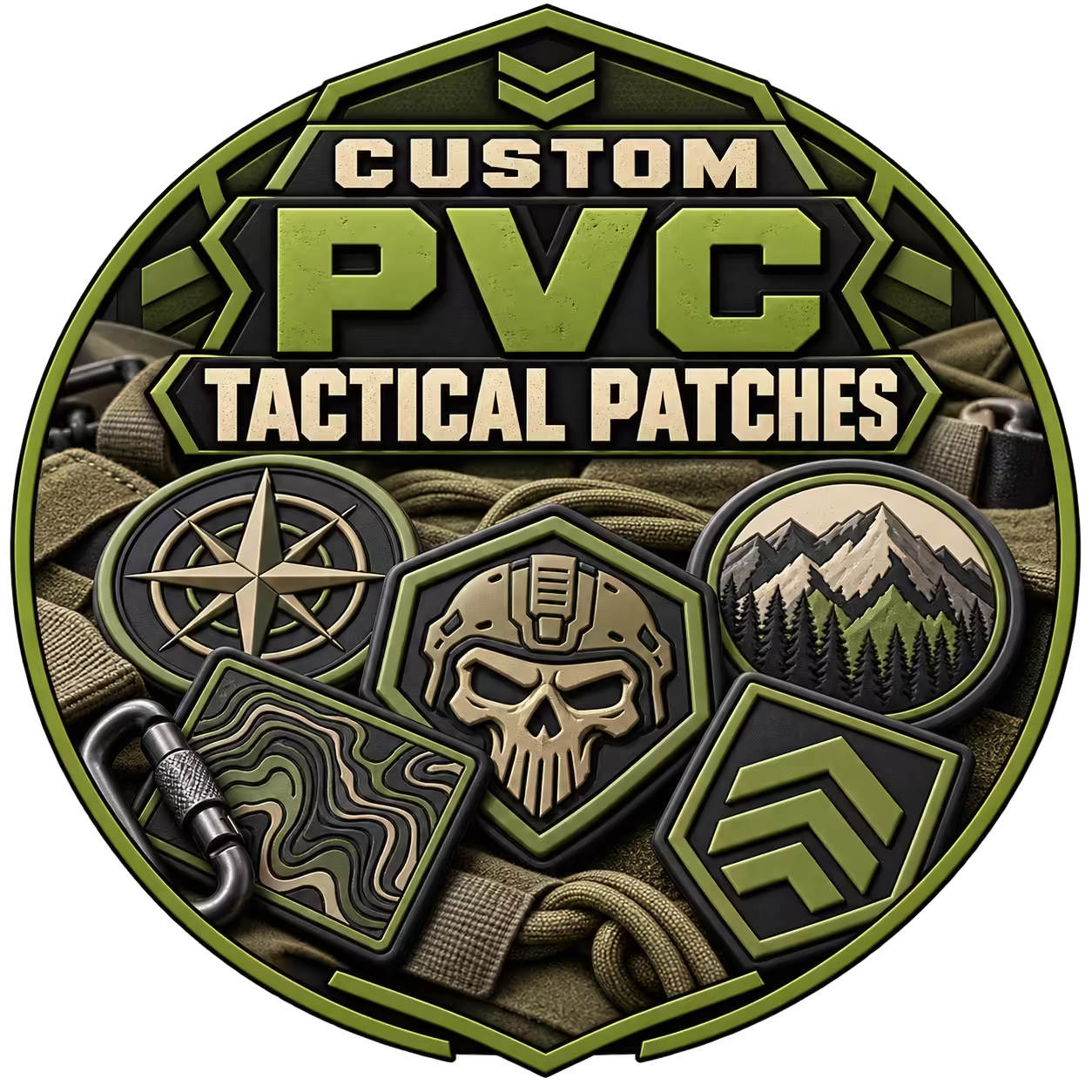
PVC Tactical Patches is defined by its function, construction and placement. PVC uses flexible moulded rubber to create a waterproof, wipe-clean tactical patch with raised 2D or 3D relief.
Custom PVC Tactical Patches should use clear operational language. Related terms such as moulded rubber, mould tooling, 2D relief, 3D relief, die-cut edge describe the same subject without forcing repetition. Unlike a generic decorative badge, the finished patch has a defined role, location and wear condition.
How PVC Tactical Patches Are Made
Production converts approved artwork into a repeatable patch specification. The maker controls dimensions, colour, edge finish and backing before checking the finished batch.
Custom PVC Tactical Patches should use clear operational language. Related terms such as moulded rubber, mould tooling, 2D relief, 3D relief, die-cut edge describe the same subject without forcing repetition. Unlike a generic decorative badge, the finished patch has a defined role, location and wear condition.
Mould Creation and Tooling
Mould Creation and Tooling controls how pvc tactical patches performs in service. The approved design aligns MOLLE, laser-cut, scale and contrast with the intended field environment. Mould Creation and Tooling forms an entity–attribute–value relationship: the patch is the entity, the named feature is the attribute, and the approved production detail is the value. This structure keeps the proof, finished batch and future reorder aligned.
Colour Filling and Curing
Colour selection balances brand accuracy with field contrast. Pantone references control colour intent, while olive drab, coyote brown and ranger green support subdued equipment. Colour Filling and Curing forms an entity–attribute–value relationship: the patch is the entity, the named feature is the attribute, and the approved production detail is the value. This structure keeps the proof, finished batch and future reorder aligned.
Hook-and-Loop Bonding
Hook-and-loop is the default backing for tactical orders. It supports fast removal from a plate carrier, MOLLE loop panel, combat shirt or equipment bag. Hook-and-Loop Bonding forms an entity–attribute–value relationship: the patch is the entity, the named feature is the attribute, and the approved production detail is the value. This structure keeps the proof, finished batch and future reorder aligned.
2D Versus 3D PVC Relief
2D Versus 3D PVC Relief is decided by construction, detail, profile and field exposure. The strongest choice matches the operational requirement rather than appearance alone.
Custom PVC Tactical Patches should use clear operational language. Related terms such as moulded rubber, mould tooling, 2D relief, 3D relief, die-cut edge describe the same subject without forcing repetition. Unlike a generic decorative badge, the finished patch has a defined role, location and wear condition.
2D Flat Relief
2D Flat Relief controls how pvc tactical patches performs in service. The approved design aligns embroidered, subdued, scale and contrast with the intended field environment. 2D Flat Relief forms an entity–attribute–value relationship: the patch is the entity, the named feature is the attribute, and the approved production detail is the value. This structure keeps the proof, finished batch and future reorder aligned.
2D Layered Relief
2D Layered Relief controls how pvc tactical patches performs in service. The approved design aligns PVC, Pantone, scale and contrast with the intended field environment. 2D Layered Relief forms an entity–attribute–value relationship: the patch is the entity, the named feature is the attribute, and the approved production detail is the value. This structure keeps the proof, finished batch and future reorder aligned.
3D Sculpted Relief
3D Sculpted Relief controls how pvc tactical patches performs in service. The approved design aligns laser-cut, hook-and-loop, scale and contrast with the intended field environment. 3D Sculpted Relief forms an entity–attribute–value relationship: the patch is the entity, the named feature is the attribute, and the approved production detail is the value. This structure keeps the proof, finished batch and future reorder aligned.
PVC Durability in Field Conditions
PVC Durability in Field Conditions controls how pvc tactical patches performs in service. The approved design aligns embroidered, subdued, scale and contrast with the intended field environment.
Custom PVC Tactical Patches should use clear operational language. Related terms such as moulded rubber, mould tooling, 2D relief, 3D relief, die-cut edge describe the same subject without forcing repetition. Unlike a generic decorative badge, the finished patch has a defined role, location and wear condition.
Water and Mud Resistance
Water and Mud Resistance controls how pvc tactical patches performs in service. The approved design aligns PVC, Pantone, scale and contrast with the intended field environment. Water and Mud Resistance forms an entity–attribute–value relationship: the patch is the entity, the named feature is the attribute, and the approved production detail is the value. This structure keeps the proof, finished batch and future reorder aligned.
UV and Colour Retention
UV-stable colour resists normal sunlight exposure. Long continuous exposure still reduces colour life, so the material and pigment specification must match the wear environment. UV and Colour Retention forms an entity–attribute–value relationship: the patch is the entity, the named feature is the attribute, and the approved production detail is the value. This structure keeps the proof, finished batch and future reorder aligned.
Abrasion Against Plate Carriers
Abrasion Against Plate Carriers controls how pvc tactical patches performs in service. The approved design aligns subdued, plate carrier, scale and contrast with the intended field environment. Abrasion Against Plate Carriers forms an entity–attribute–value relationship: the patch is the entity, the named feature is the attribute, and the approved production detail is the value. This structure keeps the proof, finished batch and future reorder aligned.
PVC Tactical Patch Specification
PVC Tactical Patches uses measurable attributes rather than subjective labels. The specification records material, dimensions, colour, edge, backing and intended wear environment.
Custom PVC Tactical Patches should use clear operational language. Related terms such as moulded rubber, mould tooling, 2D relief, 3D relief, die-cut edge describe the same subject without forcing repetition. Unlike a generic decorative badge, the finished patch has a defined role, location and wear condition.
| Entity | Value | Meaning |
|---|---|---|
| Entity | Custom PVC Tactical Patches | The subject defined by this page |
| Primary attribute | pvc tactical patches | Matches the page search intent |
| Default backing | Hook-and-loop | Removable attachment to a loop panel |
| Artwork | AI, EPS or PDF | Vector files preserve production geometry |
| Raster artwork | 300 dpi at finished size | Minimum usable raster resolution |
| Standard turnaround | 10–14 working days | Measured from proof approval |
| Express turnaround | 5–7 working days | Rush fee applies |
Design Limits of PVC
Design Limits of PVC controls how pvc tactical patches performs in service. The approved design aligns laser-cut, hook-and-loop, scale and contrast with the intended field environment.
Custom PVC Tactical Patches should use clear operational language. Related terms such as moulded rubber, mould tooling, 2D relief, 3D relief, die-cut edge describe the same subject without forcing repetition. Unlike a generic decorative badge, the finished patch has a defined role, location and wear condition.
Minimum Line Width
The production proof sets the safe minimum for the chosen material and size. Embroidered lettering starts at 4 mm, with clean lettering from approximately 1,500 stitches. Minimum Line Width forms an entity–attribute–value relationship: the patch is the entity, the named feature is the attribute, and the approved production detail is the value. This structure keeps the proof, finished batch and future reorder aligned.
Gradients and Photographic Artwork
AI, EPS and PDF vector files give the cleanest production result. Raster artwork requires at least 300 dpi at the finished size. Gradients and Photographic Artwork forms an entity–attribute–value relationship: the patch is the entity, the named feature is the attribute, and the approved production detail is the value. This structure keeps the proof, finished batch and future reorder aligned.
Small Text
Small Text controls how pvc tactical patches performs in service. The approved design aligns hook-and-loop, embroidered, scale and contrast with the intended field environment. Small Text forms an entity–attribute–value relationship: the patch is the entity, the named feature is the attribute, and the approved production detail is the value. This structure keeps the proof, finished batch and future reorder aligned.
PVC Colour and Pantone Matching
Colour selection balances brand accuracy with field contrast. Pantone references control colour intent, while olive drab, coyote brown and ranger green support subdued equipment.
Custom PVC Tactical Patches should use clear operational language. Related terms such as moulded rubber, mould tooling, 2D relief, 3D relief, die-cut edge describe the same subject without forcing repetition. Unlike a generic decorative badge, the finished patch has a defined role, location and wear condition.
PVC Tactical Patch Pricing and Minimums
The minimum order quantity depends on the selected material. The quotation states the exact MOQ before artwork approval.
Custom PVC Tactical Patches should use clear operational language. Related terms such as moulded rubber, mould tooling, 2D relief, 3D relief, die-cut edge describe the same subject without forcing repetition. Unlike a generic decorative badge, the finished patch has a defined role, location and wear condition.
Why PVC Carries a Mould Cost
Price depends on quantity, finished size, construction, backing and setup work. The written quotation states the run price and VAT at 20%. Why PVC Carries a Mould Cost forms an entity–attribute–value relationship: the patch is the entity, the named feature is the attribute, and the approved production detail is the value. This structure keeps the proof, finished batch and future reorder aligned.
Reorder Pricing
Ordering starts with artwork, quantity, finished size, material and backing. A free digital proof records the specification before the 10–14-working-day standard production period begins. Reorder Pricing forms an entity–attribute–value relationship: the patch is the entity, the named feature is the attribute, and the approved production detail is the value. This structure keeps the proof, finished batch and future reorder aligned.
Ordering PVC Tactical Patches
Ordering starts with artwork, quantity, finished size, material and backing. A free digital proof records the specification before the 10–14-working-day standard production period begins.
Custom PVC Tactical Patches should use clear operational language. Related terms such as moulded rubber, mould tooling, 2D relief, 3D relief, die-cut edge describe the same subject without forcing repetition. Unlike a generic decorative badge, the finished patch has a defined role, location and wear condition.
Stories About Us and Our Customers
PVC Tactical Patch FAQs
Are PVC patches waterproof?
Yes. PVC Tactical Patches supports that requirement when the approved specification includes the correct material, size and backing.
Can PVC patches be washed?
Yes. PVC Tactical Patches supports that requirement when the approved specification includes the correct material, size and backing.
Do PVC patches fade in sunlight?
UV-stable colour resists normal sunlight exposure. Long continuous exposure still reduces colour life, so the material and pigment specification must match the wear environment.
What is the minimum text size on a PVC patch?
The production proof sets the safe minimum for the chosen material and size. Embroidered lettering starts at 4 mm, with clean lettering from approximately 1,500 stitches.
Can PVC patches be made without Velcro?
Yes. PVC Tactical Patches can use sew-on, iron-on or plain backing when removable hook-and-loop attachment is not required.