Custom Tactical Patches
Custom tactical patches are bespoke identification badges made from PVC rubber, embroidered twill, woven fabric or laser-cut Cordura, backed with hook-and-loop fasteners for attachment to plate carriers, uniforms and field kit. UK military personnel, cadet units, security teams, airsoft squads and search-and-rescue volunteers order these patches to display callsigns, blood types, unit names, national flags and morale designs. Tactical patches differ from standard custom patches in three attributes: backing system, material durability and colour palette. We manufacture every patch in the UK, include free artwork and digitising, and dispatch on a tracked service.
What Are Custom Tactical Patches?
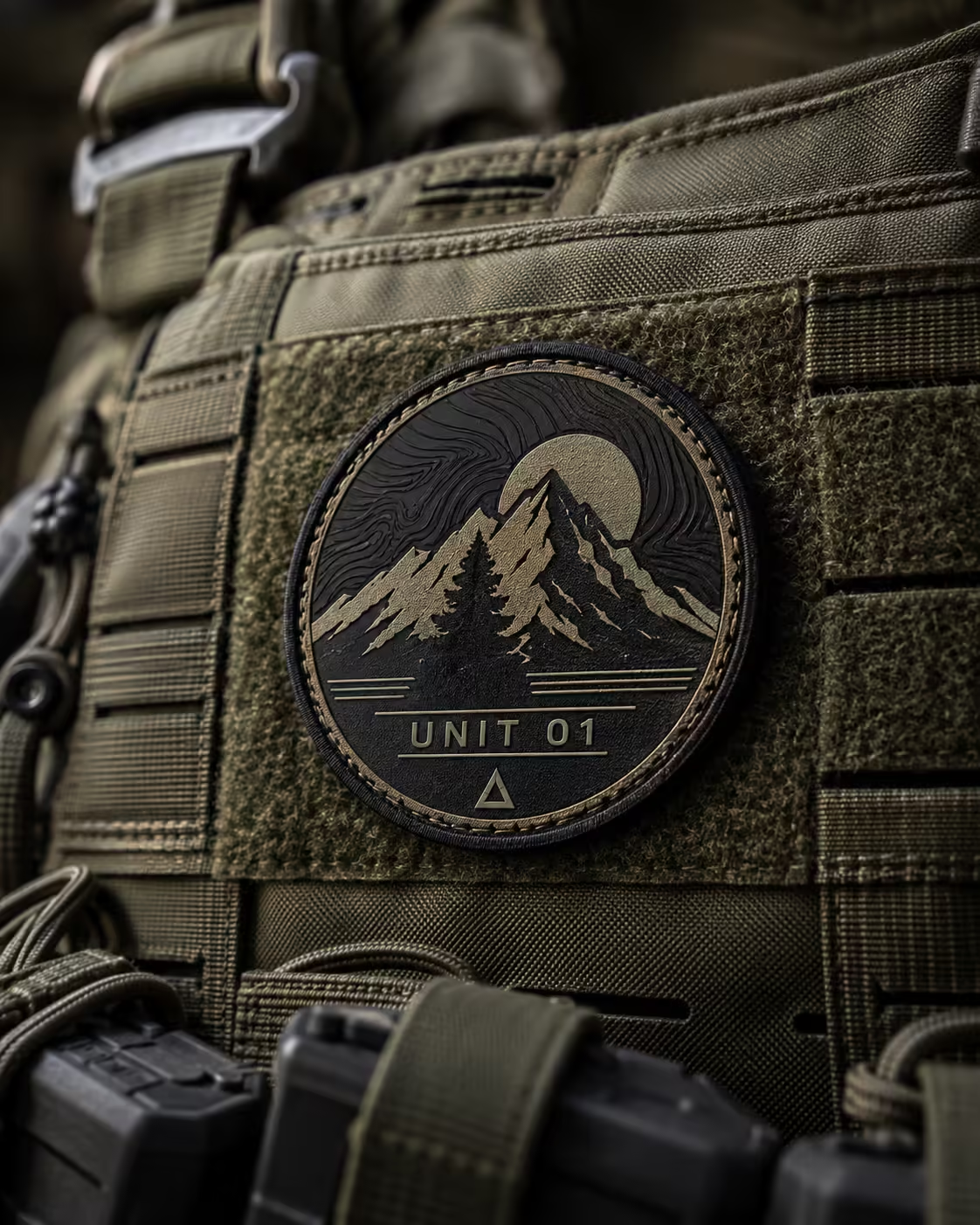
A tactical patch is a durable badge built for operational wear rather than decoration. The badge carries identifying information on the outward face and a hook-and-loop fastener on the reverse. The fastener attaches to the loop panels sewn onto plate carriers, combat shirts, smocks, caps and rucksacks, which allows the wearer to swap patches between kit items in seconds.
Construction determines how long a patch survives. PVC resists water, mud, oil and UV exposure. Embroidered twill resists abrasion and repeated laundering. Laser-cut Cordura resists fraying at the edge because the cut seals the fibres. Each material answers a different wear environment, and the material you select governs the level of detail the finished patch holds.
How Tactical Patches Differ From Standard Custom Patches
Standard custom patches prioritise appearance. Tactical patches prioritise function. Three attributes separate the two categories.
- Backing system. Standard patches ship with iron-on adhesive as the default. Tactical patches ship with hook-and-loop backing as the default, because tactical garments carry loop panels rather than plain fabric.
- Material durability. Standard patches use polyester thread on a twill base. Tactical patches use PVC, Cordura or high-density polyester thread rated for field conditions.
- Colour palette. Standard patches use saturated brand colours. Tactical patches use subdued tones — Olive Drab, Coyote Brown, Ranger Green, Multicam and Black — that reduce visual signature against operational clothing.
Unlike iron-on fashion patches, which bond permanently to a single garment, Velcro-backed tactical patches transfer between garments without heat, adhesive or stitching. That removability explains why hook-and-loop dominates the category, and it also explains why most tactical orders include a matching loop panel.
What Information a Tactical Patch Carries
Tactical patches encode identity, medical data and unit affiliation. UK orders commonly specify:
- Callsign patches — an operator’s assigned alphanumeric identifier.
- Blood type patches — group and Rhesus factor for medical responders.
- Name tapes — surname strips, typically 100 × 25 mm, worn on the chest or sleeve.
- Rank and unit insignia — formation flashes, squadron markings and cadet detachment badges.
- National flag patches — the Union Flag, worn in full colour or subdued.
- Morale patches — team slogans, mascots and humour designs worn off-parade.
- IFF markers — infrared-reflective squares and letters for identification under night vision.
Each of these designs uses the same production routes. The next section sets out those routes and the properties each one delivers.
Types of Custom Tactical Patches
Tactical patches fall into six production categories. The category you choose depends on the wear environment, the fineness of the artwork and whether the patch needs to read in daylight, in low light or under night vision devices.
 01
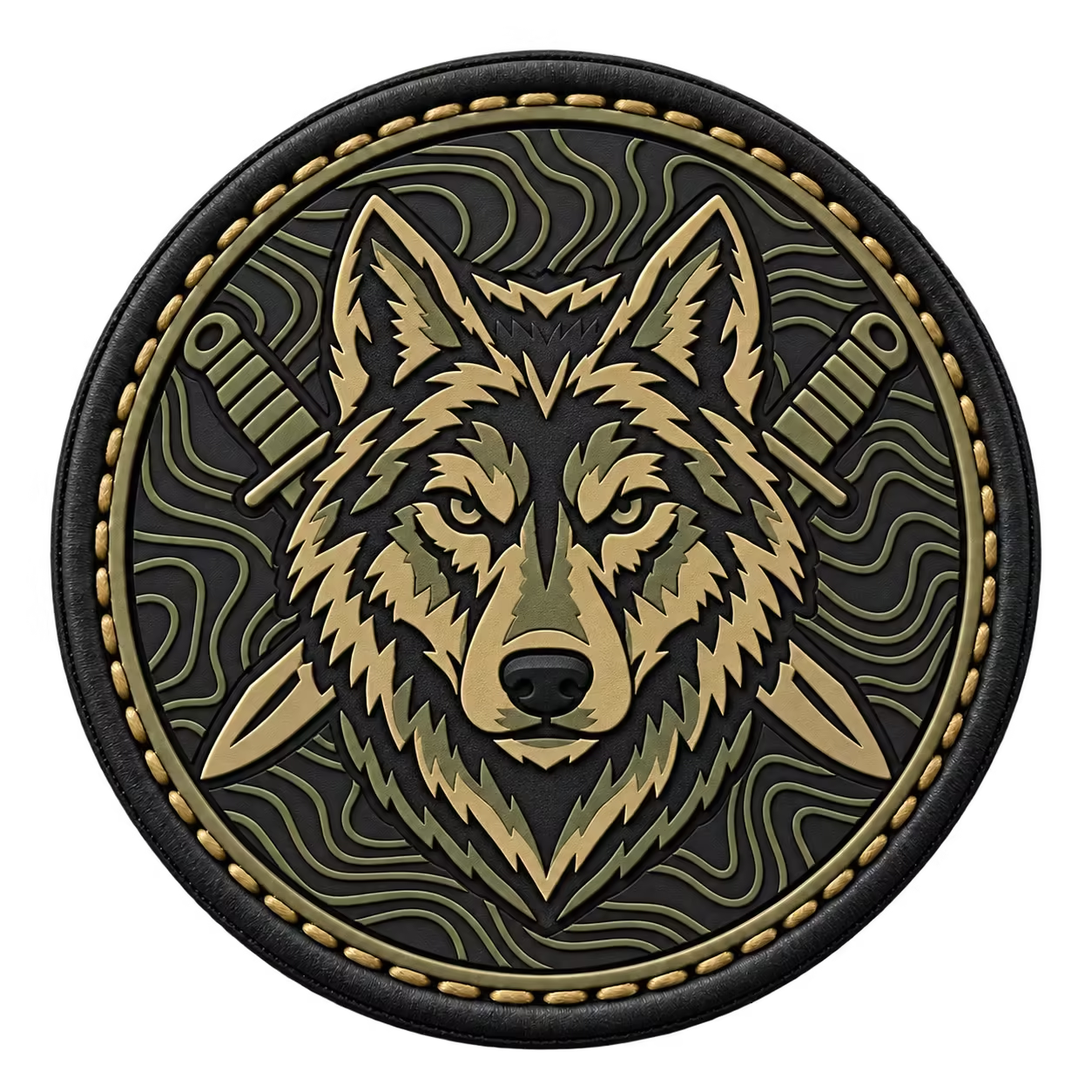
Custom PVC Tactical Patches
PVC patches are moulded from soft, flexible rubber and bonded to a hook-and-loop backing. The mould carries raised 2D or 3D relief and a die-cut edge that follows any outline. PVC is waterproof across the entire face, holds colour under UV exposure and wipes clean after contact with mud or oil. PVC is the dominant material in UK tactical orders for that reason.
 02
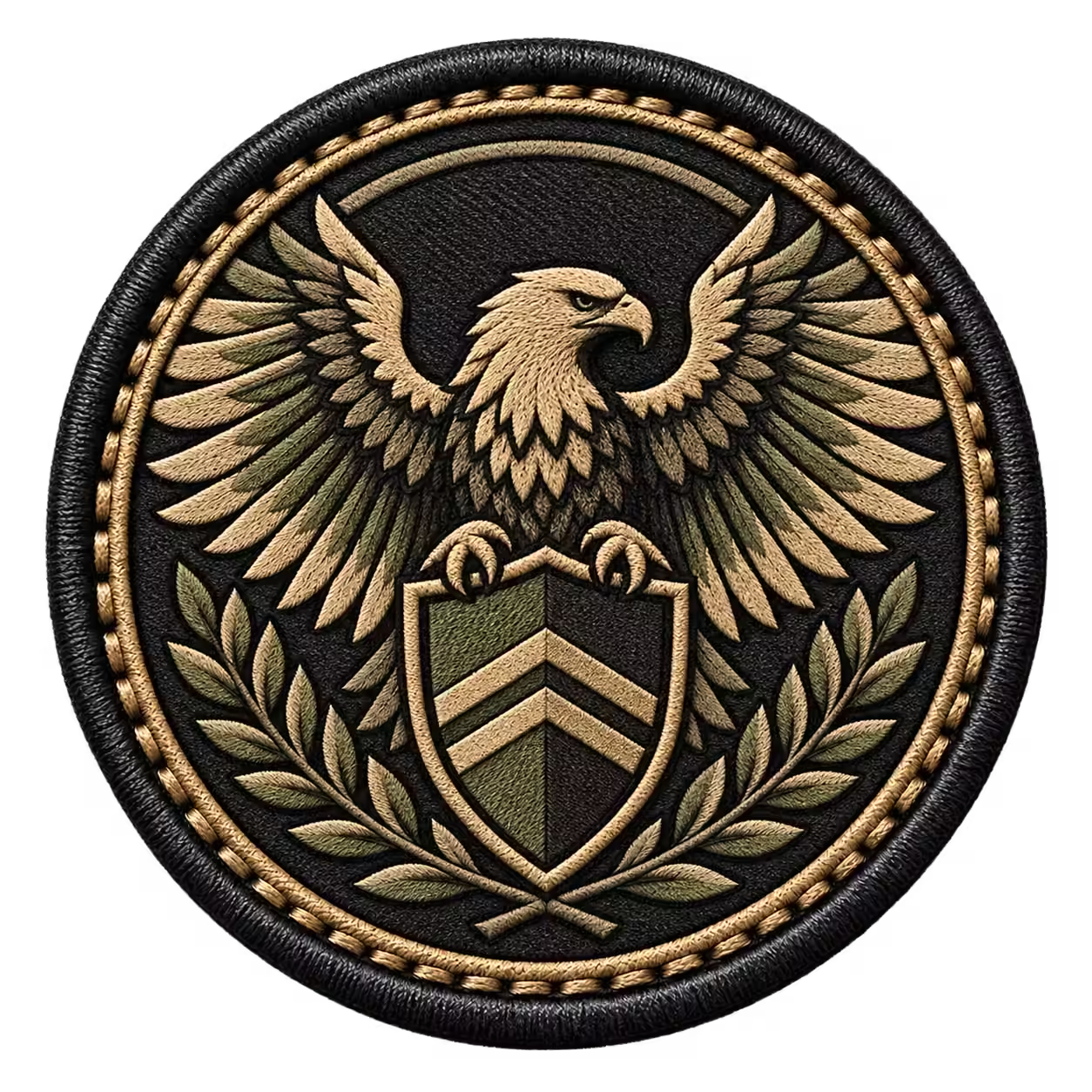
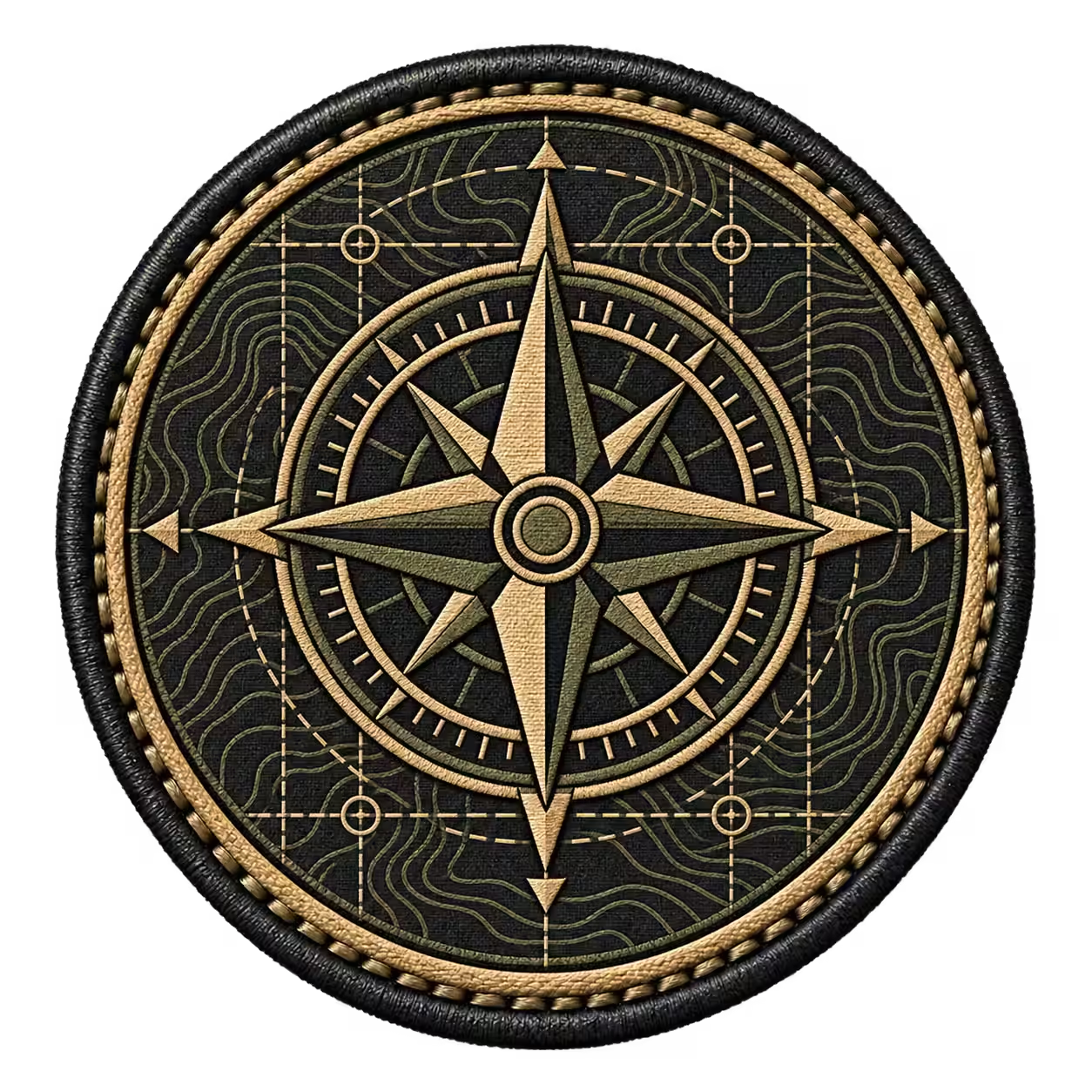
Embroidered Tactical Patches
Embroidered patches are stitched onto a twill base with polyester thread and finished with a merrow border or a laser-cut edge. Stitch density controls sharpness: designs of roughly 1,500 stitches and above hold clean lettering at small sizes. Embroidery produces a raised, textured surface and remains the standard finish for cadet, regimental and club insignia.
 03
Woven Tactical Patches
Woven patches are produced on a loom using fine threads rather than stitched onto a base fabric. The finer thread reproduces small text and intricate line work that embroidery cannot resolve, and the finished patch sits flatter and thinner against the garment. Woven construction suits detailed crests, small name strips and any design carrying text below 4 mm in height.
 04
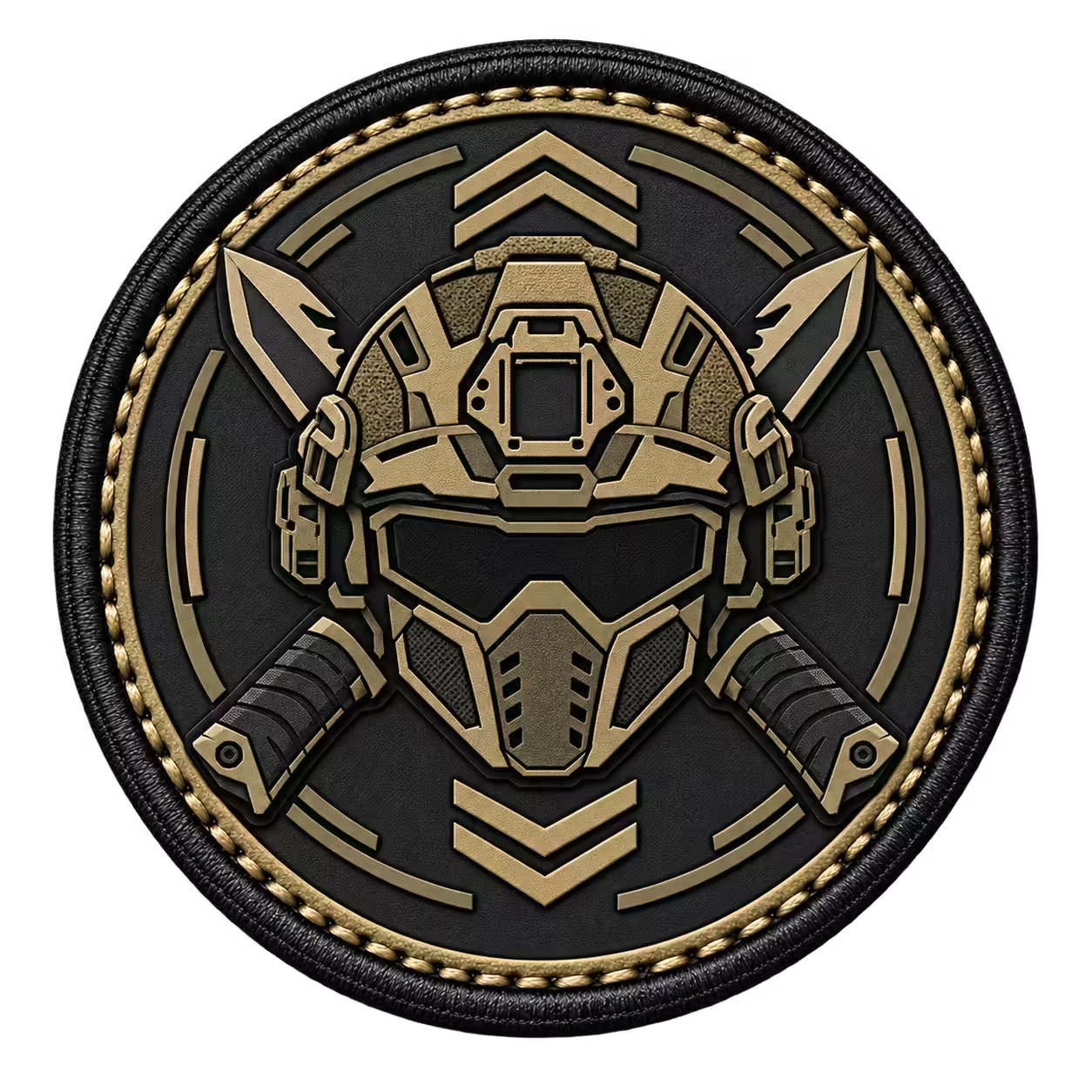
Laser-Cut Tactical Patches
Laser-cut patches use a heat-cut edge that seals the fabric fibres, which removes fraying without a merrow border. The process cuts Cordura, nylon and IR-reflective sheet into precise custom outlines. Laser cutting produces the thinnest profile of any tactical patch and pairs directly with hook-and-loop tape.
 05
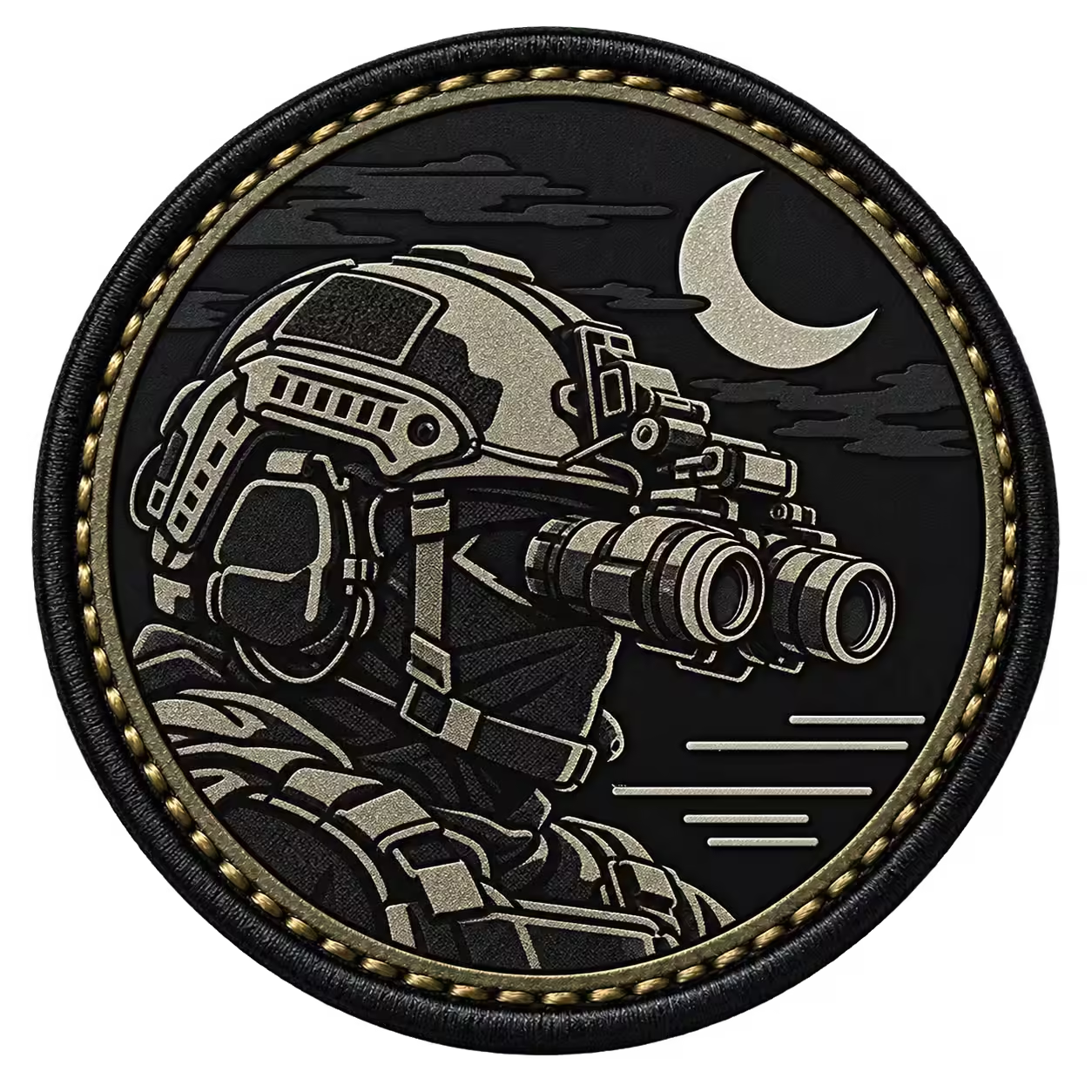
IR Reflective Patches
IR patches use a passive infrared-reflective material that absorbs visible light and returns infrared wavelengths. The patch reads as a flat dark block in daylight and returns a bright signature to a viewer using night vision equipment with an IR illuminator. UK night operations, airsoft night games and cadet exercises use IR callsign, flag and blood type markers for identification.
 06
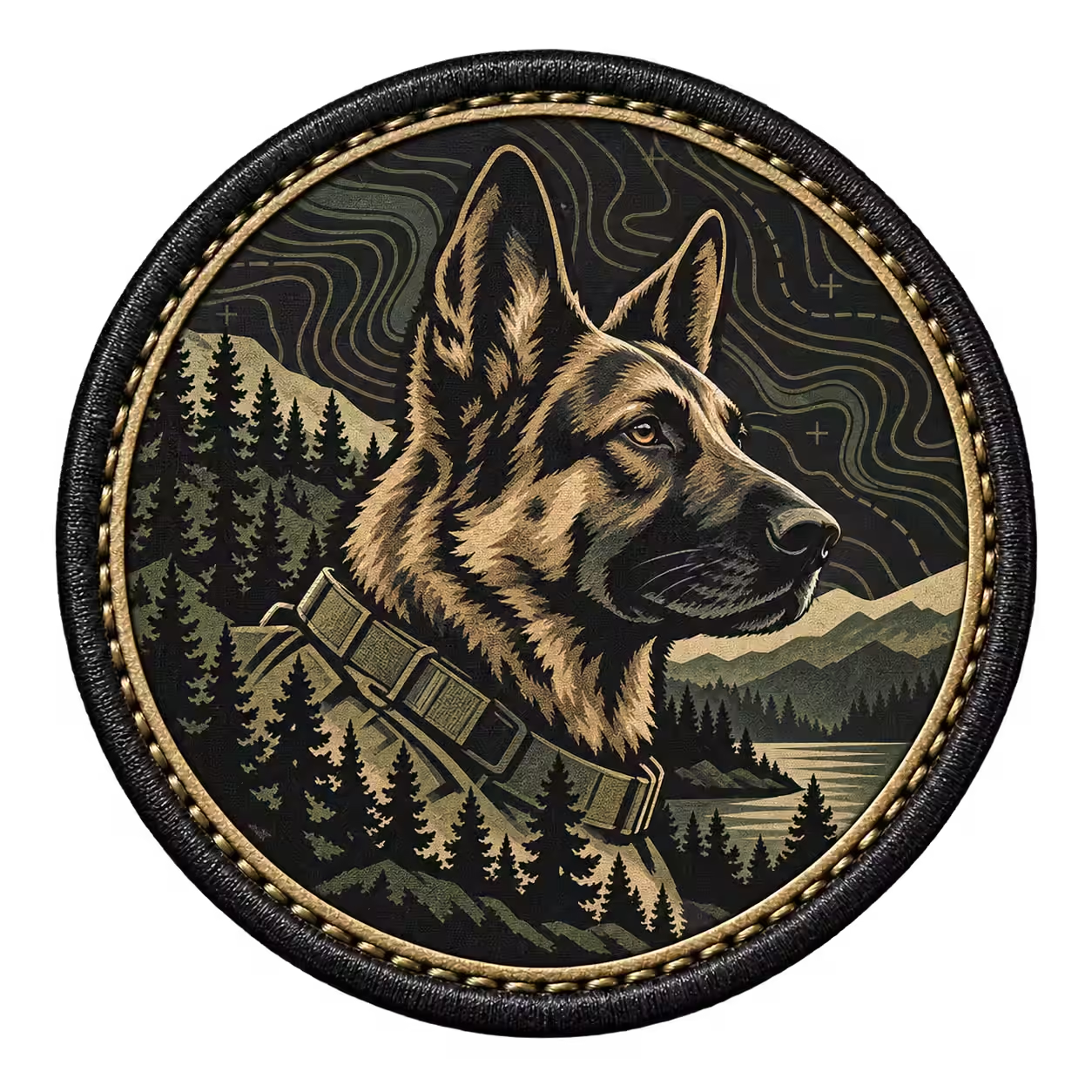
Printed and Sublimated Tactical Patches
Printed patches reproduce photographic detail, gradients and unlimited colour counts on a lightweight fabric face. Dye sublimation bonds the ink into the fibre rather than sitting on top of it, which preserves colour through repeated washing. Printed construction suits complex artwork, event patches and short-run morale designs.
Tactical patch materials compared
| Type | Material | Weather resistance | Detail level | Profile | Best for |
|---|---|---|---|---|---|
| PVC | Moulded rubber | Highest | High (2D/3D relief) | Thick | Plate carriers, wet and muddy conditions |
| Embroidered | Polyester thread on twill | High | Medium | Raised | Unit insignia, cadet badges, club crests |
| Woven | Fine woven thread | High | Very high | Thin | Fine text, small crests, name strips |
| Laser-cut | Cordura / nylon | High | Medium | Thinnest | Low-profile kit, IR builds |
| IR reflective | IR-reflective sheet | High | Low (block shapes) | Thin | Night identification, IFF markers |
| Printed | Sublimated fabric | Medium | Photographic | Thin | Full-colour artwork, morale designs |
Material governs appearance and durability. Backing governs how the patch attaches, and the two decisions are made together.
Backing and Attachment Options
Backing determines permanence. Tactical patches use four attachment systems, and each one suits a different garment and a different use pattern.
 01
Hook-and-Loop (Velcro) Backing
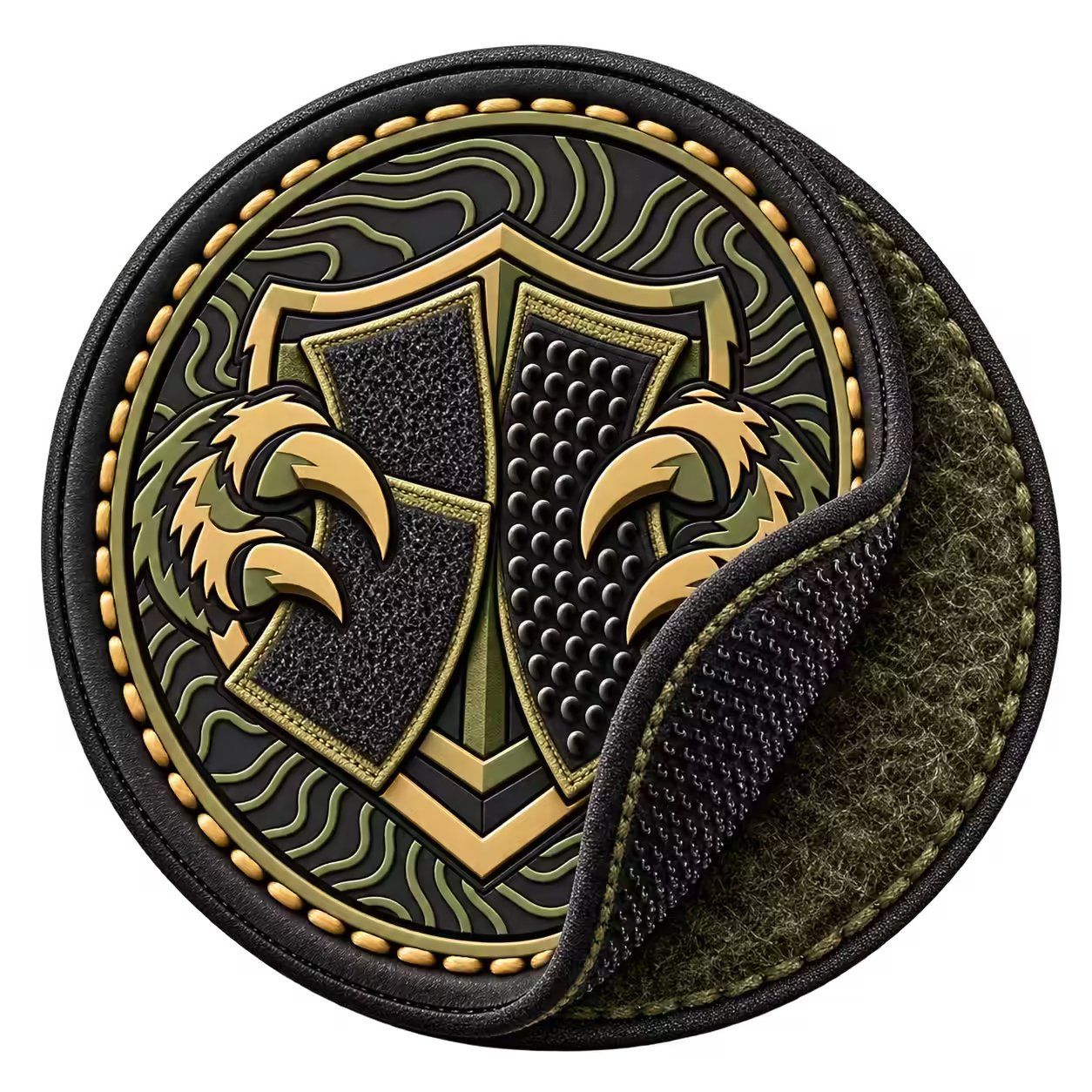
Hook-and-loop backing bonds a hook-side fastener to the reverse of the patch. The hook engages the loop panels already fitted to plate carriers, combat shirts, MOLLE webbing and tactical caps. The wearer removes and repositions the patch without tools, which suits callsigns, blood types and morale designs that change between tasks. Hook-and-loop is our default backing on every tactical order.
 02
Sew-On Backing
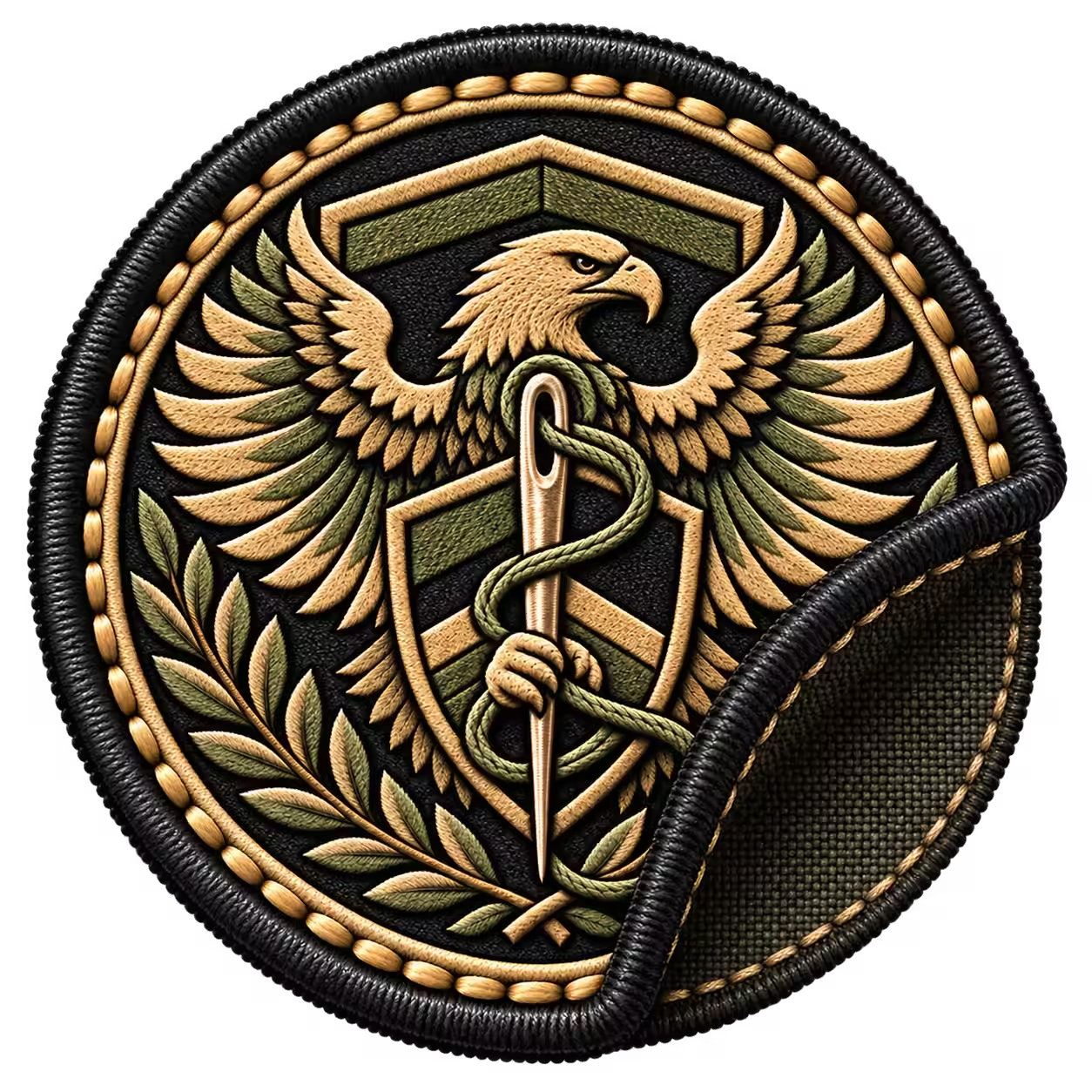
Sew-on backing leaves the patch edge clear for stitching by hand or machine. The stitched attachment is permanent and survives industrial laundering, high-abrasion wear and repeated field use. Sew-on suits fixed insignia — rank slides, formation badges and uniform markings that stay on one garment.
 03
Iron-On Backing
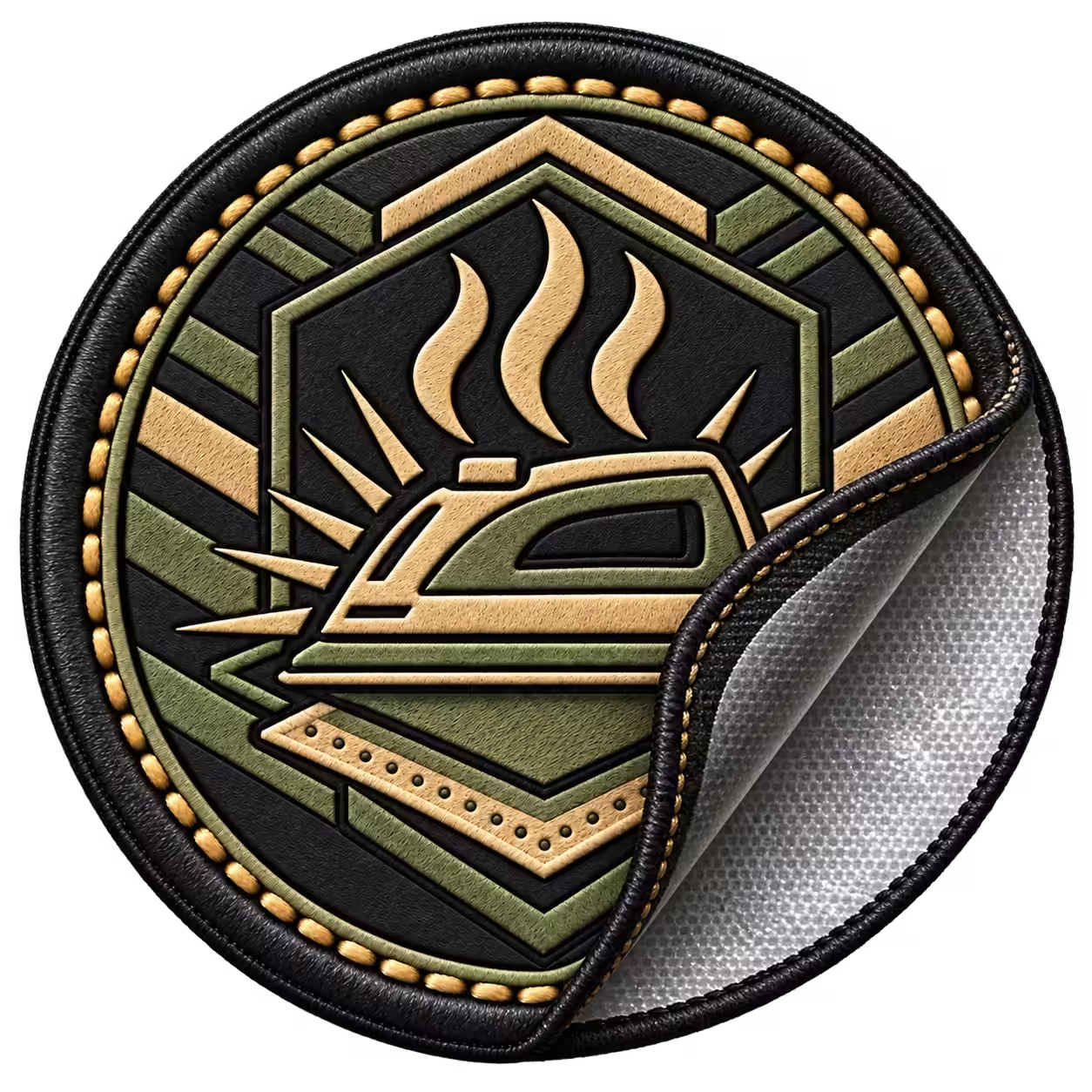
Iron-on backing applies a heat-activated adhesive film to the reverse. A domestic iron or a heat press bonds the patch to cotton and polycotton fabrics in under a minute. Iron-on is semi-permanent: the bond holds through normal wear and weakens under industrial washing, so field kit benefits from a reinforcing stitch around the border.
 04
Loop Panels for Plate Carriers and MOLLE
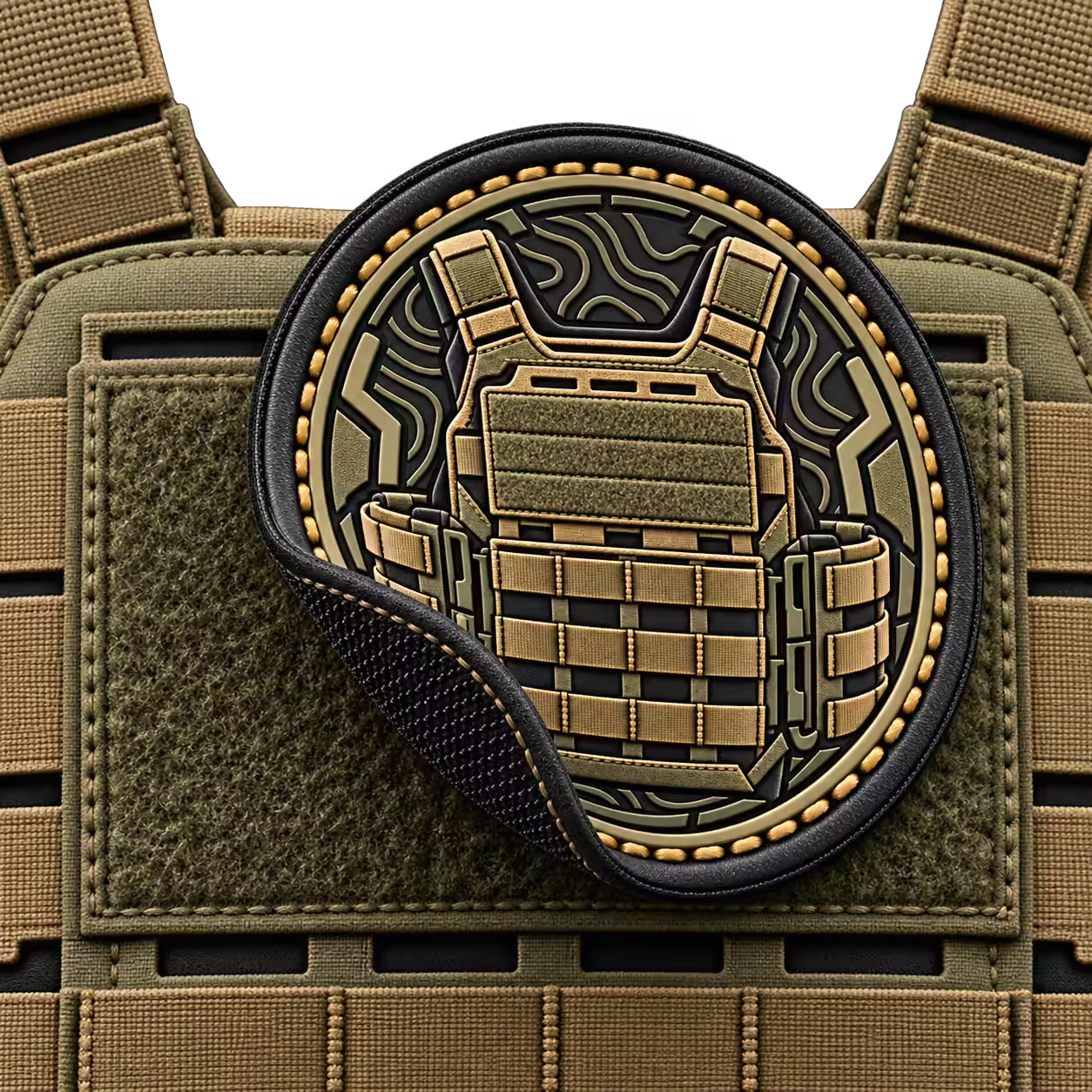
Loop panels are sewn or strapped onto garments and carriers that arrive without a receiving surface. The panel converts any flat area — a rucksack lid, a dog harness, a smock sleeve — into a patch position. Ordering panels alongside patches gives a team one consistent placement across mixed kit.
Backing options compared
| Backing | Permanence | Applied by | Removable | Recommended for |
|---|---|---|---|---|
| Hook-and-loop | Semi-permanent | Wearer | Yes | Callsigns, blood types, morale patches |
| Sew-on | Permanent | Tailor or machine | No | Rank, unit and uniform insignia |
| Iron-on | Semi-permanent | Heat press or iron | Partially | Caps, casual kit, low-abrasion wear |
| Loop panel | Fitted accessory | Sewn or strapped | Yes | Garments without an existing loop field |
Backing and material settle the build. Colour, size and placement settle how the patch performs once it is on the kit — the subject of the next section.
Tactical Patch Colours and Camouflage Matching
Colour selection on a tactical patch serves concealment, not branding. A patch sits on the outermost layer of the kit, so its tone either blends with the garment or breaks it up. Teams choose between two colour strategies: subdued tones that reduce visual signature, and high-visibility tones that mark the wearer deliberately.
Subdued Colourways
Subdued patches use low-contrast, desaturated tones drawn from standard military palettes. Five colourways cover most UK orders.
- Olive Drab — matches British and NATO field clothing across woodland and temperate ground.
- Coyote Brown — matches desert and arid-pattern kit, and pairs with most modern plate carriers.
- Ranger Green — a darker green that holds contrast against MTP without reading as a marker.
- Black — the standard for security, close protection and law enforcement roles.
- Multicam and MTP — printed camouflage backgrounds that sit flush against matching uniform patterns.
Subdued designs replace full-colour artwork with a two-tone build. The Union Flag, for example, reproduces in black and Olive Drab rather than red, white and blue, which preserves recognition while removing the colour signature.
Pantone Colour Matching for PVC and Thread
Pantone matching reproduces a specified brand or unit colour across a production run. PVC accepts direct pigment matching, so a moulded patch reproduces a PMS reference closely. Embroidery matches to the nearest thread in the manufacturer’s range, because thread is dyed in fixed shades rather than mixed to order. Supply your PMS codes with the artwork and we confirm the achievable match on the digital proof before production starts.
Low-Visibility Versus High-Visibility Designs
Low-visibility patches suppress contrast for field use. High-visibility patches increase contrast for identification. Medical responders, search-and-rescue volunteers and marshals wear high-visibility designs — reflective tape, fluorescent thread and white-on-red medical crosses — because being seen is the operational requirement. Many teams order both builds of the same design and swap them on the hook-and-loop backing as the task changes.
Colour settles how the patch reads. Size and placement settle where it goes and whether it fits.
Sizes, Shapes and Placement
Tactical patch dimensions follow the kit they attach to. Loop panels on plate carriers, sleeves and caps come in fixed sizes, so the patch is specified to the panel rather than to the artwork.
Standard Tactical Patch Sizes
| Patch type | Typical size | Position |
|---|---|---|
| Name tape | 100 × 25 mm | Chest, sleeve |
| Callsign patch | 75 × 25 mm | Chest, helmet |
| Blood type patch | 50 × 25 mm | Sleeve, helmet, IFAK |
| Flag patch | 75 × 50 mm | Upper sleeve |
| Square morale patch | 50 × 50 mm | Plate carrier front |
| Rectangular morale patch | 75 × 50 mm | Plate carrier front |
| Large back patch | 250 × 100 mm | Rear plate carrier panel, jacket |
Small text needs room. Lettering below 4 mm high loses definition in embroidery, so designs with fine type either scale up or switch to woven or PVC construction.
Where Tactical Patches Attach
Placement positions follow the loop fields fitted to standard kit:
- Plate carrier front panel — morale patches, unit markings, IFF squares.
- Plate carrier rear panel — large identification patches reading MEDIC, SECURITY or a team name.
- Upper sleeve — flags, formation flashes, cadet detachment badges.
- Chest — name tapes and callsigns.
- Helmet — blood type, IR markers and glow-in-the-dark cat’s eyes.
- Caps, rucksacks and IFAK pouches — small square patches and medical identifiers.
Custom Shapes and Die-Cut Borders
Shape is unrestricted. PVC moulds and laser cutting both follow any closed outline, which produces shields, rockers, arrowheads and silhouette designs without a rectangular carrier. Embroidered patches take a merrow border on simple outlines — circles, squares, shields — and a laser-cut border on complex ones, because a merrow overlock cannot follow tight internal corners.
Specification covers the object. The next section covers the people ordering it.
Who Uses Custom Tactical Patches in the UK
Tactical patches serve any group that operates in uniform and needs to be identified quickly. Five user groups account for most UK orders.
 01
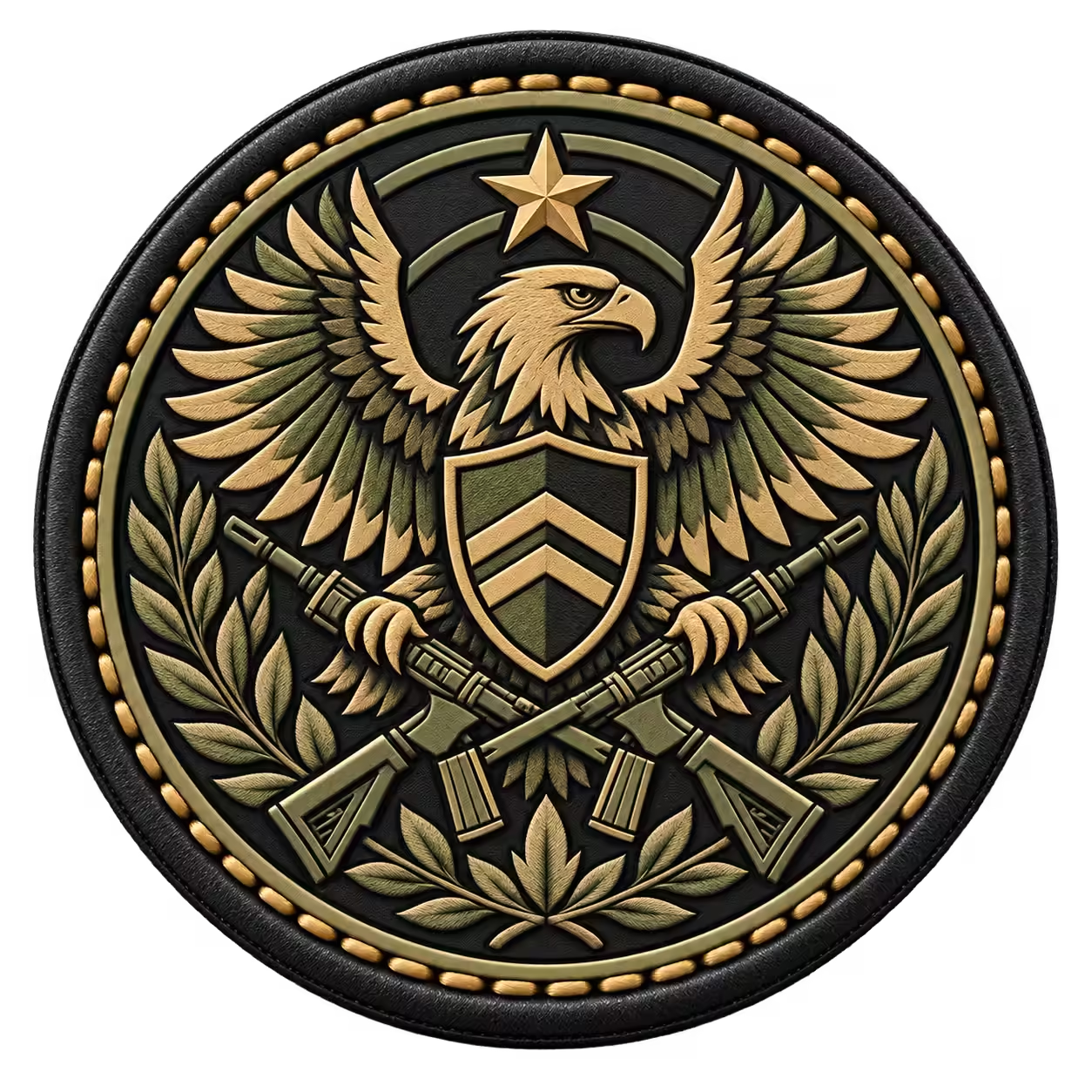
Military and Cadet Units
Regular and reserve personnel order morale patches, callsigns and IR markers for exercise and off-parade wear. Cadet organisations — the Army Cadet Force, Combined Cadet Force, Sea Cadets and Air Training Corps — order detachment badges, squadron patches and name tapes for parade nights, camps and adventure training. Cadet orders typically run 20 to 100 pieces and repeat annually as intakes change.
 02
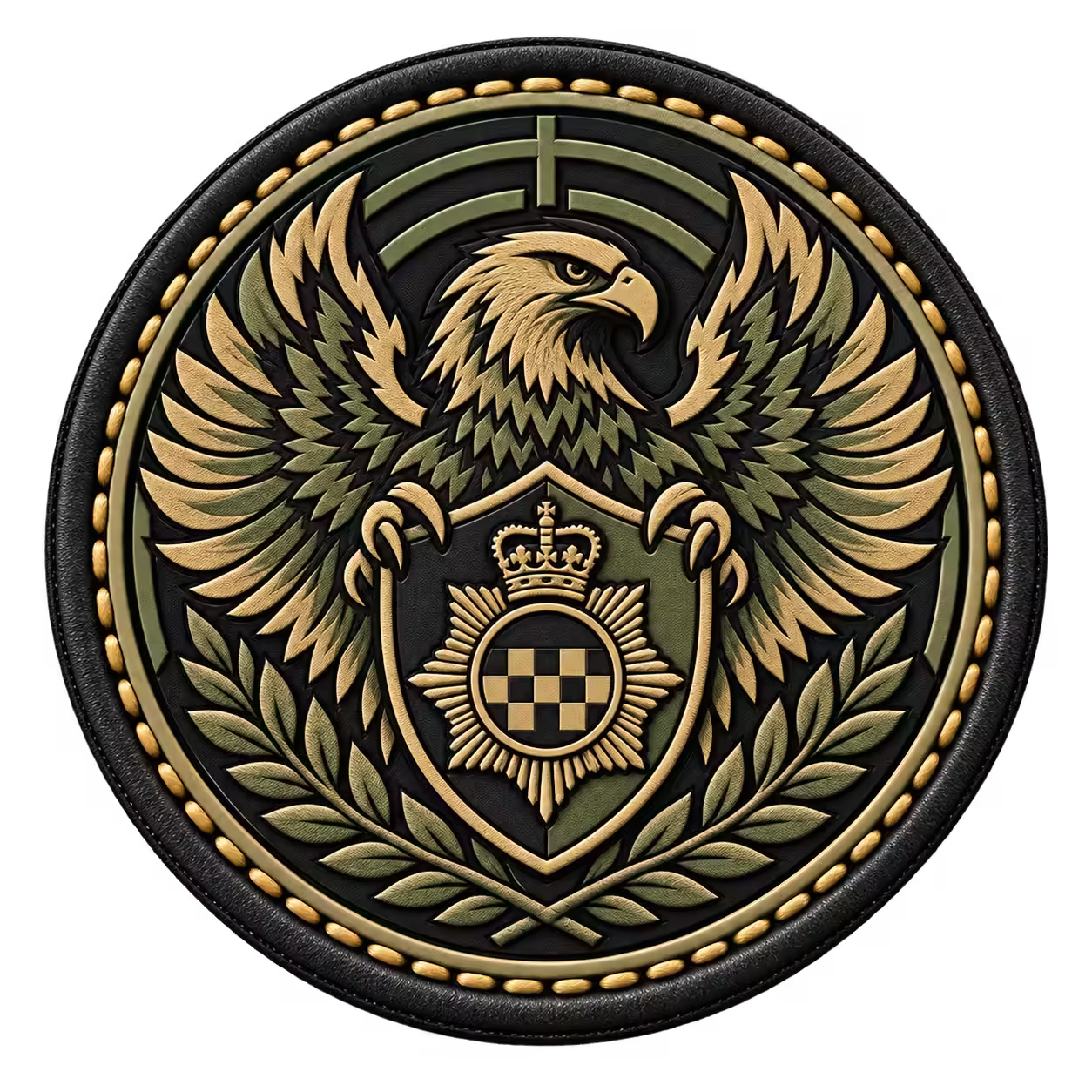
Police, Security and Close Protection Teams
Security companies, door supervision teams and close protection operators order black subdued patches carrying company names, SIA-related role markers and rear identification panels. Uniform consistency across a team matters here, so these orders specify fixed sizes and repeat to the same artwork file for years.
 03
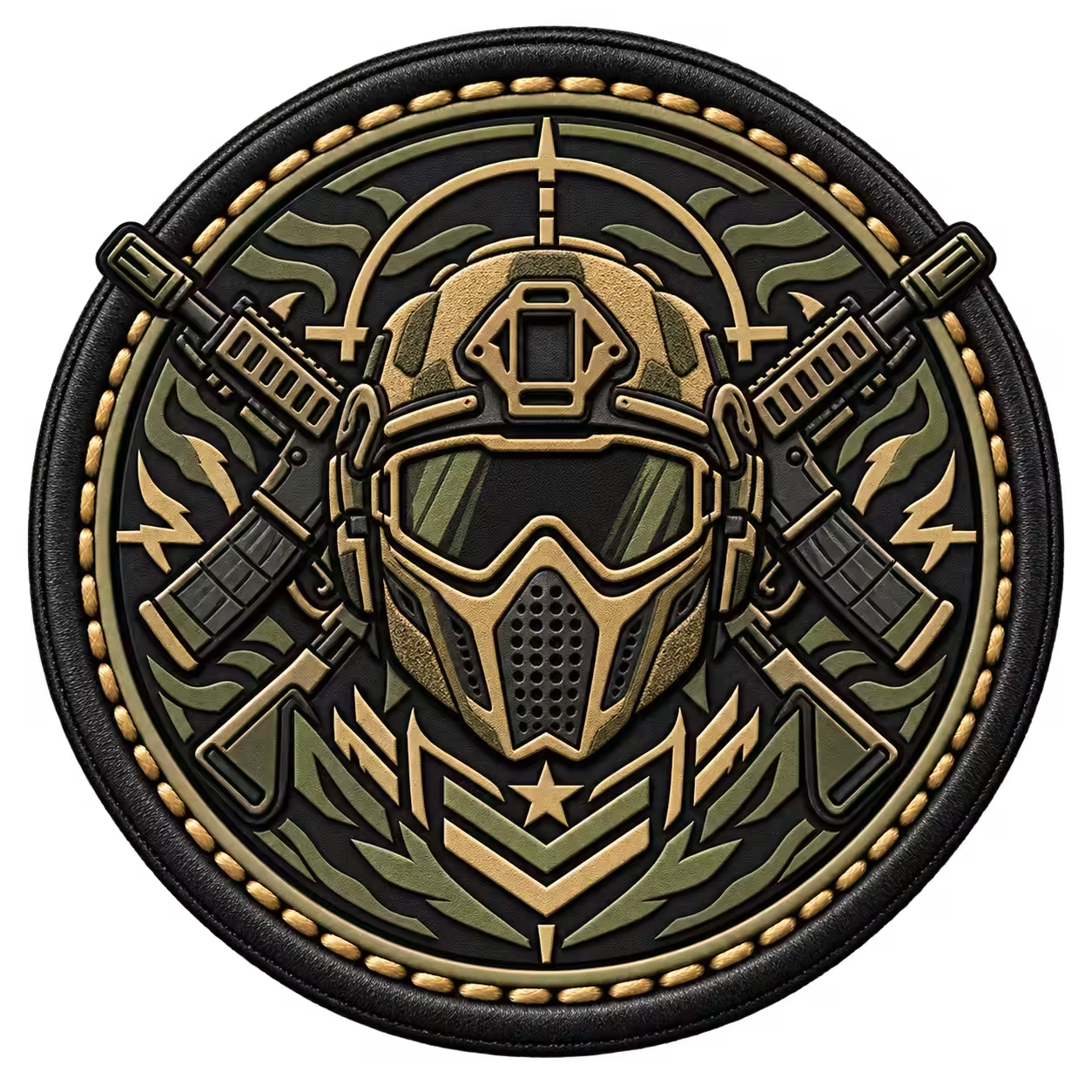
Airsoft, Milsim and Paintball Teams
Airsoft sites and milsim units are the largest recreational buyers in the UK. Teams order squad patches, callsigns and IR markers for night games, and site staff order marshal identification. Airsoft orders favour PVC for its resistance to BB impact, rain and mud across weekend events.
 04
Search and Rescue and Medical Responders
Mountain rescue teams, lowland search teams, event medics and first-aid providers order high-visibility patches carrying role titles, medical crosses and reflective elements. These builds prioritise legibility at distance and in low light.
 05
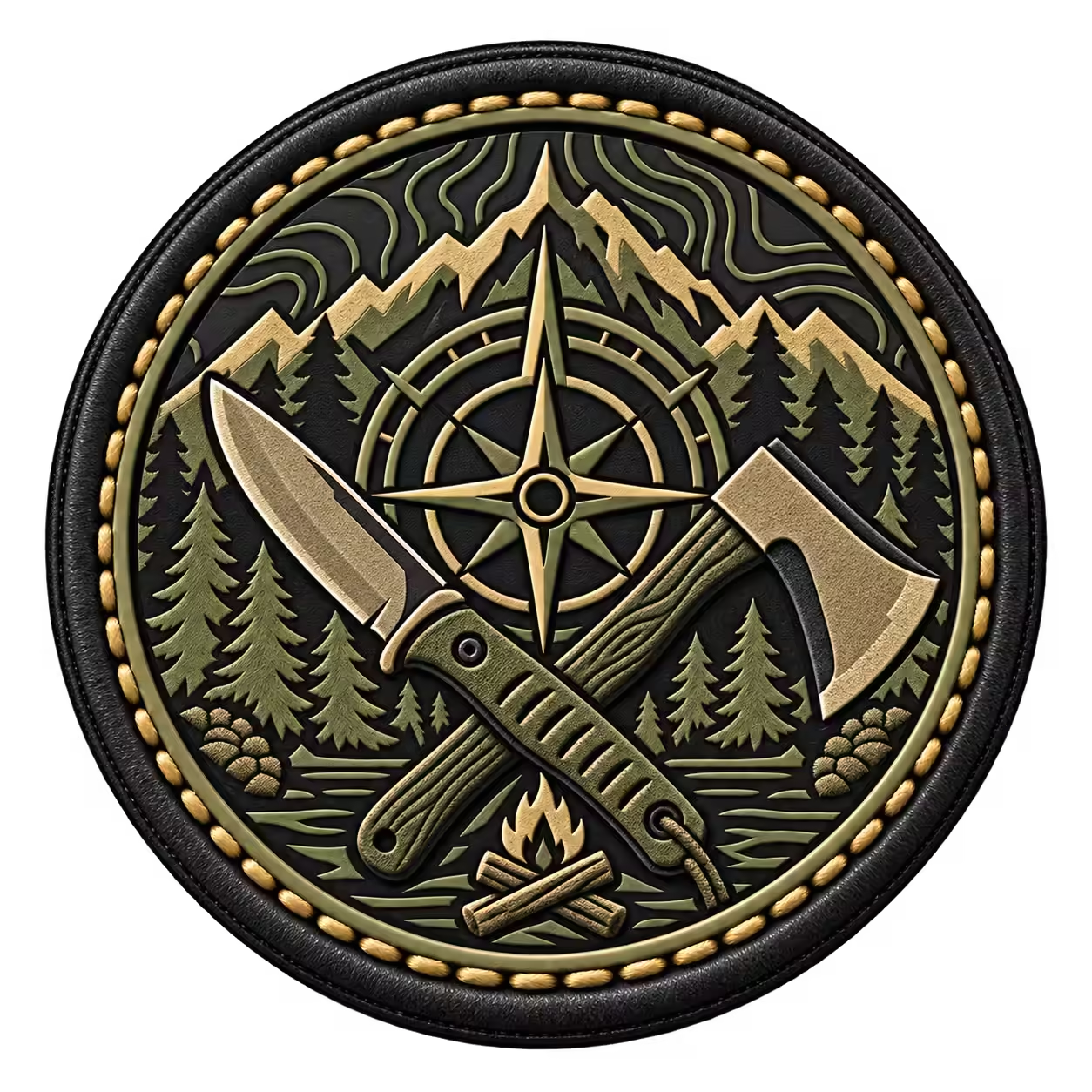
Shooting Clubs, Bushcraft and EDC
Practical shooting clubs, bushcraft groups and everyday-carry communities order club crests and morale designs for range bags, jackets and rucksacks. These orders run smaller, often 10 to 50 pieces, and favour embroidered or woven construction.
Each of these groups follows the same ordering route.
How to Order Custom Tactical Patches
Ordering runs in five stages, from artwork submission to tracked UK delivery.
- Send your artwork and specification. Supply the design, the quantity, the finished size in millimetres, the material and the backing. A sketch or a photograph is enough to start.
- Receive a quotation. We price the run against size, quantity, material, stitch count and backing, and return a written quote.
- Approve a free digital proof. We digitise the artwork and produce a proof showing colours, dimensions and border finish. Amendments at this stage cost nothing.
- Production and quality checks. Approved artwork moves to production. Every batch is checked for colour match, dimensional accuracy, border finish and backing adhesion before packing.
- Tracked UK delivery. Completed orders dispatch on a tracked service, with despatch confirmation sent by email.
Artwork and File Requirements
Vector files reproduce most accurately. Supply AI, EPS or PDF artwork where possible. Raster files work at 300 dpi or higher at the finished patch size. Low-resolution images, screenshots and social media exports lose detail during digitising, and we redraw them rather than reproduce them. Include any PMS references and note which elements must not be simplified.
Free Digital Proof
The proof is the specification record. It shows the finished dimensions, the colour assignments, the border type and the backing. Production begins only after written approval, and the approved proof becomes the reference for every future reorder of the same design.
Production and Quality Checks
Embroidered runs are checked for stitch density, thread breaks and border consistency. PVC runs are checked for mould definition, colour bleed and backing bond. Laser-cut runs are checked for edge seal. Any piece failing a check is remade before the order ships.
UK Delivery and BFPO Addresses
Orders dispatch across mainland UK on a tracked service. We deliver to BFPO addresses for units posted overseas — supply the full BFPO number with the delivery address at the point of order, as these consignments route separately from standard post.
Ordering settles the process. Pricing, minimum quantities and delivery complete the picture.
Pricing, Minimum Order and Delivery
Tactical patch pricing is calculated per run, not per item. Six variables set the unit price, and quantity has the largest effect because setup and digitising costs spread across the batch.
What Affects the Price
- Quantity. Unit cost falls as the run grows. A 25-piece order carries a higher per-patch price than a 250-piece order of the same design.
- Finished size. Price scales with surface area. A 100 × 25 mm name tape costs less than a 100 × 100 mm morale patch.
- Material. PVC carries a mould cost on the first run and a lower cost on repeats. Embroidery carries a digitising cost. Woven and printed runs carry neither.
- Stitch count. Embroidered pricing follows thread consumption. A design at 8,000 stitches costs more than the same outline at 3,000 stitches.
- Backing. Hook-and-loop costs more than plain or iron-on backing because the fastener is a separate bonded component.
- Special treatments. IR reflective material, glow-in-the-dark thread, metallic thread and reflective tape each add a per-unit cost.
Minimum Order Quantity
Low minimums suit the way UK tactical buyers order. A cadet detachment replacing badges for one intake, an airsoft team of eight and a security firm fitting out a new contract all order in double figures rather than hundreds. Confirm the exact MOQ on the quotation, as it varies by material — PVC carries a higher floor than embroidery because of the mould.
Delivery Time
Delivery usually takes 10–14 days. Once your order is ready to leave us, it is sent using a tracked delivery service so you can follow its journey and know when to expect it.
Quotes and VAT
Quotations are issued in pounds sterling and state whether VAT at 20% is included. Quotes hold for a fixed period stated on the document. Payment is taken before production begins, and the approved proof forms the specification the finished order is measured against.
Cost and delivery settle the commercial terms. One further consideration applies to tactical designs specifically.
UK Rules on Military and Emergency-Services Insignia
Most tactical patch designs raise no legal question at all. Morale designs, team names, callsigns, blood types and original club crests are unrestricted. A narrow set of designs is restricted, and the restrictions sit in statute rather than in company policy. The summary below is general information rather than legal advice, and we decline artwork that falls into the restricted categories.
Wearing Military Uniform and Insignia
The Uniforms Act 1894 makes it unlawful for a person not serving in the armed forces to wear, without permission, the uniform of those forces or any dress bearing the regimental or other distinctive marks of such a uniform. A separate offence applies where the uniform or insignia is worn in circumstances likely to bring contempt upon it, and that offence carries a higher penalty. Exemptions exist for stage performances and bona fide military representation, which is why re-enactment groups operate lawfully.
The practical effect for a patch order is narrow. An original design worn on civilian clothing sits outside the Act. A faithful reproduction of a serving regiment’s insignia, ordered by someone with no connection to that regiment, does not.
Regimental Badges and MOD Trade Marks
The Ministry of Defence holds registered trade marks in service badges, regimental crests and unit emblems, and licenses their commercial reproduction. A cadet detachment or a serving unit ordering its own insignia works through the correct chain of authority. A third party reproducing a regimental crest for sale requires a licence. Supply evidence of authority with the artwork and production proceeds without delay.
Police and Red Cross Emblems
Police insignia carries its own restriction: unauthorised possession and deceptive wearing of police uniform articles are offences under the Police Act 1996. The red cross emblem is protected separately under the Geneva Conventions Act 1957, which restricts its use to authorised bodies. Medical patches avoid the restriction by using alternative symbols — the Star of Life, a green cross, or a plain MEDIC text panel — which we supply as standard alternatives.
Compliance protects the buyer as well as the supplier. The next section sets out what else the supplier relationship delivers.
Why Order Tactical Patches From Us
- UK production and UK support. Orders are produced and handled in the United Kingdom, with pricing in pounds and no import charges on arrival.
- Free artwork and digitising. Sketches, photographs and rough concepts are redrawn into production-ready files at no cost.
- Free digital proof before production. Amendments at proof stage are unlimited and free.
- Low minimum order. Small teams order realistic quantities rather than committing to hundreds of pieces.
- Artwork retained for reorders. Approved files are kept on record, so repeat runs match the original exactly and skip setup.
- Tracked delivery, including BFPO. Every order ships tracked, with BFPO consignments handled for units posted overseas.
Stories About Us and Our Customers
Custom Tactical Patch FAQs
Are tactical patches Velcro-backed as standard?
Yes. Hook-and-loop is the default backing on tactical orders because plate carriers, combat shirts and tactical caps carry loop panels designed to receive it.
Can I order a small quantity of custom tactical patches?
Yes. Low minimums apply across embroidered, woven and printed builds, and the exact figure for your chosen material is stated on the quotation.
Are PVC patches waterproof?
Yes. Moulded PVC is waterproof across the entire patch face and resists mud, oil and UV exposure without fading or absorbing water.
Do IR patches work under night vision?
Yes. IR reflective material returns infrared light to a viewer using night vision equipment with an IR illuminator, and reads as a flat dark block in daylight.
Can you match a specific Pantone colour?
Yes for PVC, which accepts direct pigment matching. Embroidery matches to the nearest available thread shade, and the achievable match is confirmed on the proof.
Is it legal to wear a custom military-style patch in the UK?
Yes for original designs, morale patches and club crests. Reproducing the distinctive insignia of a serving unit without authority is restricted under the Uniforms Act 1894.
Do you deliver to BFPO addresses?
Yes. Supply the full BFPO number with the order and the consignment is routed accordingly.
How long does a custom tactical patch order take?
Delivery usually takes 10–14 days. We use a tracked delivery service and send the tracking details when your order is on its way.
Start Your Tactical Patch Order
Specifying a tactical patch comes down to four decisions: the material that suits the wear environment, the backing that suits the garment, the colourway that suits the role, and the size that fits the loop panel it attaches to. PVC handles the wettest and dirtiest conditions, embroidery handles unit and cadet insignia, woven handles fine text, and laser-cut handles the lowest profile builds. Hook-and-loop covers almost every tactical application, with sew-on reserved for permanent uniform markings.
Send your design, quantity and finished size, and we return a quotation and a free digital proof before anything goes into production.